Author Interview – Richard S. Whitt
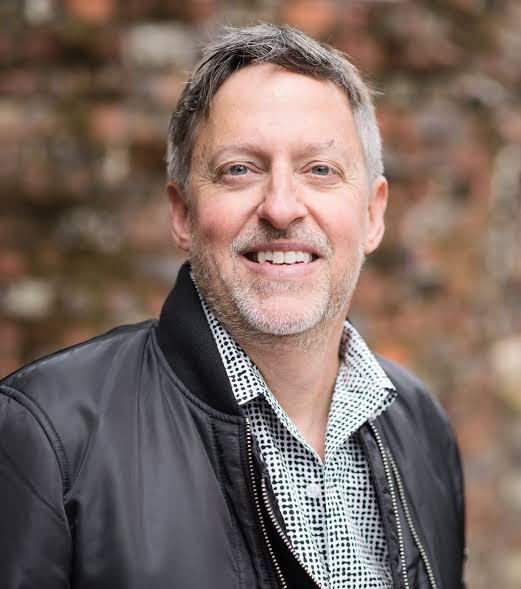
At The Book Shelf Press, we love talking to authors about their books, and we’re delighted to chat with Richard S. Whitt, author of Reweaving the Web. His debut nonfiction book discusses the future of the internet.
Hi Richard, congratulations on the release of Reweaving the Web! Can you tell us what is your book about?
Well, as you may know, the web is sort of a common metaphor that folks have been using over the last 30 years for the World Wide Web, which was invented by Sir Tim Berners-Lee back in the early ’90s, and it’s become the main online network all of us have been using globally since then.
As the metaphor goes, the strands of the web are sort of being woven for us through websites and applications by a whole host of entities, companies, nonprofits, governments, etc. And that’s the way that we’ve been interacting with each other and with these websites and applications over the years.
In my mind, the problem has been that there are certain companies, what we call the multi-sided online platforms, or the MOPS, in my vernacular — bit of a mouthful — but it’s companies we interact with every day. It’s Google and Amazon and Facebook and Microsoft and a few others.
The paradigm that I call the SEAMS paradigm, which I talk about in the book, really tries to capture this new dynamic. SEAMS basically says surveillance, extraction, analysis and manipulation, and it is a feedback loop, a cycle which I think is fairly well understood now.
And so the thesis of the book is we can do better. After providing this analysis of the web that’s been woven for us by these companies over the last few decades, we need to have the ability, the power to come in and say, no, no, we want to weave our own web. We want to reweave it in a way that serves our interests and not just the interests of the powerful companies.
What made you want to write it?
I’ve been fortunate over the years to work for some great companies, and really the hallmark of my professional life has been at Google. I was there for over 11 years, first in the DC office for the company, and then the last four years out in Mountain View, out here in the Bay Area, where I currently live.
Really sitting in some of these meetings at Google, I was struck over time by certain aspects of the way that they talked about Google’s place in the world that impressed upon me that, again, with this notion of great power comes great responsibility, sometimes the company was not always seeing that.
One example is the term “user”, right? There are consumers, there are citizens, there are patrons, there are clients, customers. Each of these, there’s a certain understanding that there’s some sort of quid pro quo, certain ways that you treat people. You’re a client. There’s a certain relationship. There’s maybe even a sense of a duty of care or loyalty towards you, implicitly or otherwise, right? A user has none of that.
As a lawyer, that disturbed me. That bothered my sense of like, well, wait a minute, we should be more than that online.
Those are just some of the ways in my time, particularly the last three or four years at the company out here in California, I came to realise there were things that could be better about the web, and maybe some of the ideas I’ve come up with can help try to make some improvements.
Who did you write it for?
Part of hopefully the value of the book is to bring it to audiences who can look at it, recognise the challenges with the current web and the MOPS and the SEAMS paradigm, but then also say, okay, great, we diagnosed the problem. What are some solutions? Well, here’s some very concrete things that we can sketch out for you.
The interesting thing is we play a role in all of that, right? The typical approach is to say, okay, well, we’re a consumer. That’s the voice we have. And in some cases maybe that is the strongest voice. It’s the power of the purse, right? We can go out there, use our purchasing power, as economists like to call it.
But the point is, we wear many, many hats. Sometimes we don’t remember or underplay the types of stakes we have as stakeholders in the world, so hopefully some of these and other examples I give in the book give people a sense of, oh wow, yeah, I can do more than I’d realised to create this sort of empowerment for myself and my family.
What were your goals for the book?
I try to be prescriptive in terms of laying it out, but also very open-ended around the idea that there’s just so much more we can do together if we collaborate. This is a provisional approach, right? It’s just a suggestion. I have some recommendations. The key is to go from here, work together, find commonalities in terms of different groups that people want to work with together, and try to make this happen.
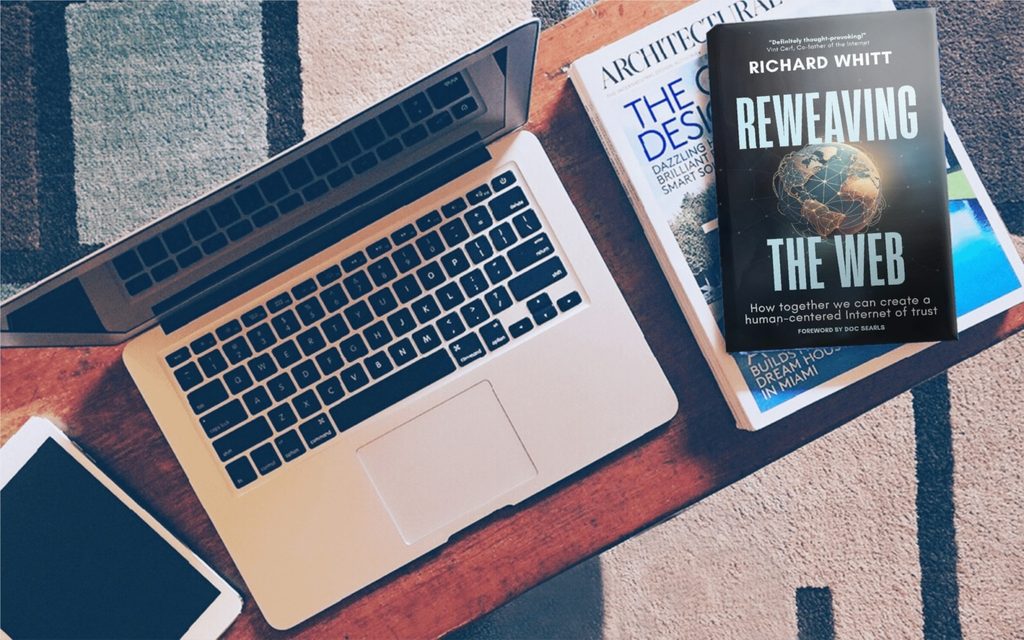
Would you like to share any key quotes from the book?
“With great power comes great responsibility.”
I use a number of different science fiction movies and references in the book, particularly talking about the AIs that are coming into the web today, so hopefully people will find that both entertaining but also enlightening.
Uncle Ben advises Peter Parker, his young nephew, not really knowing that Peter Parker is in fact going to be Spider-Man, but the quote that he uses is “With great power comes great responsibility.” Initially Peter Parker resists the notion of using his power for anything, like being a crime fighter, but comes to realise that he is in a very privileged place and that he needs to be accountable for his actions, but also that in fact he has a societal obligation to use his powers in the right way.
What do you hope the book achieves?
It really is the notion of collaboration and the fact that we all are stakeholders in this. The last chapter really does try to bring that to bear, to say we can talk all we want to about paradigms and protocols and governance structures and all that. But it’s all about the people. And if anything, the people are the ones that really do have the power here.
It’s an invitation. It’s like, let’s go from here and let’s create this. There’s nothing to hold us back, particularly if we collaborate together collectively in these various ways, as these multiple stakeholders, as I talk about in the book.
So I’d like, hopefully, at the end of the day people to see this as a call to action; that it’s not just a prescription, it’s not just sort of like, here’s the worst of the web and we’re stuck with it. No, no, no. There are things we can do today, tomorrow, next week, next year that can bring all this into reality.
And the Carla of 2032 doesn’t have to be, again, as I mentioned, it’s not sci-fi, right? It can be a nonfiction parable that all of us could be part of. So hopefully that’s where people will end up after reading the book and want to get involved.
Are there any books or thinkers that particularly influenced you while writing Reweaving the Web?
One of the things I also would like to say: I’m inspired particularly by technologists who don’t normally come from the normal voice, which is a male voice, which includes my voice, of course. But some of the most original thinkers, and the ones who’ve really, I think, done some amazing work to help paint this vision of what the future can be, have been women.
Shoshana Zuboff wrote this amazing book, The Age of Surveillance Capitalism. It’s not just sort of a treatise. She actually did the empirical work. She talked to people, including many people employed by the MOPS. Her theories are built around the realities of the way things are, rather than something sort of highfalutin. So, amazing work.
And then Donella Meadows was one of the original systems thinkers. She wrote a great book, Thinking in Systems, which has become a classic in the field.
There’s two other names I’ll throw in there as well: Catherine D’Ignazio and Lauren Klein wrote a book called Data Feminism. They come at it from being very serious, committed data scientists, but from outside the male-dominated world that has created some of the paradigms we’re still wrestling with today, and they bring to the table this idea that data science is ultimately about people. It’s not about ones and zeros.
Thank you for sharing, Richard!