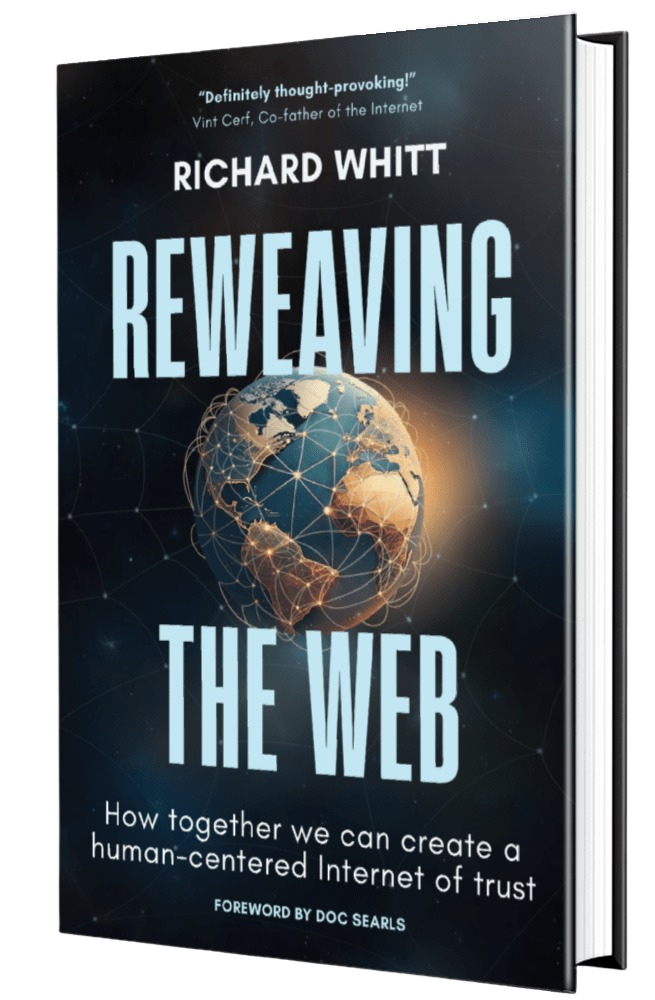
About the Book
The Web promised connection, creativity and access. But the dominant online model has also normalised surveillance, data extraction and systems designed to influence our behaviour. The result is a digital environment in which trust – and individual agency – can be difficult to sustain.
In Reweaving the Web, technology policy expert Richard S. Whitt asks what it would take to build something better. Drawing on decades at the intersection of technology, law, business and public policy, he proposes a human-centered Internet of trust: an ecosystem in which people are treated as clients rather than products.
At the centre of Whitt’s vision are Net Fiduciaries – trusted digital intermediaries bound by duties of care and loyalty – and “edgetech” such as authentic personal AI agents that can protect, enhance and promote our interests. Rather than stopping at critique, the book sets out concrete pathways for turning those ideas into practice.
For readers concerned about AI, privacy, platform power and the future of the Internet, Reweaving the Web offers both a diagnosis of the present system and a hopeful, actionable alternative.